
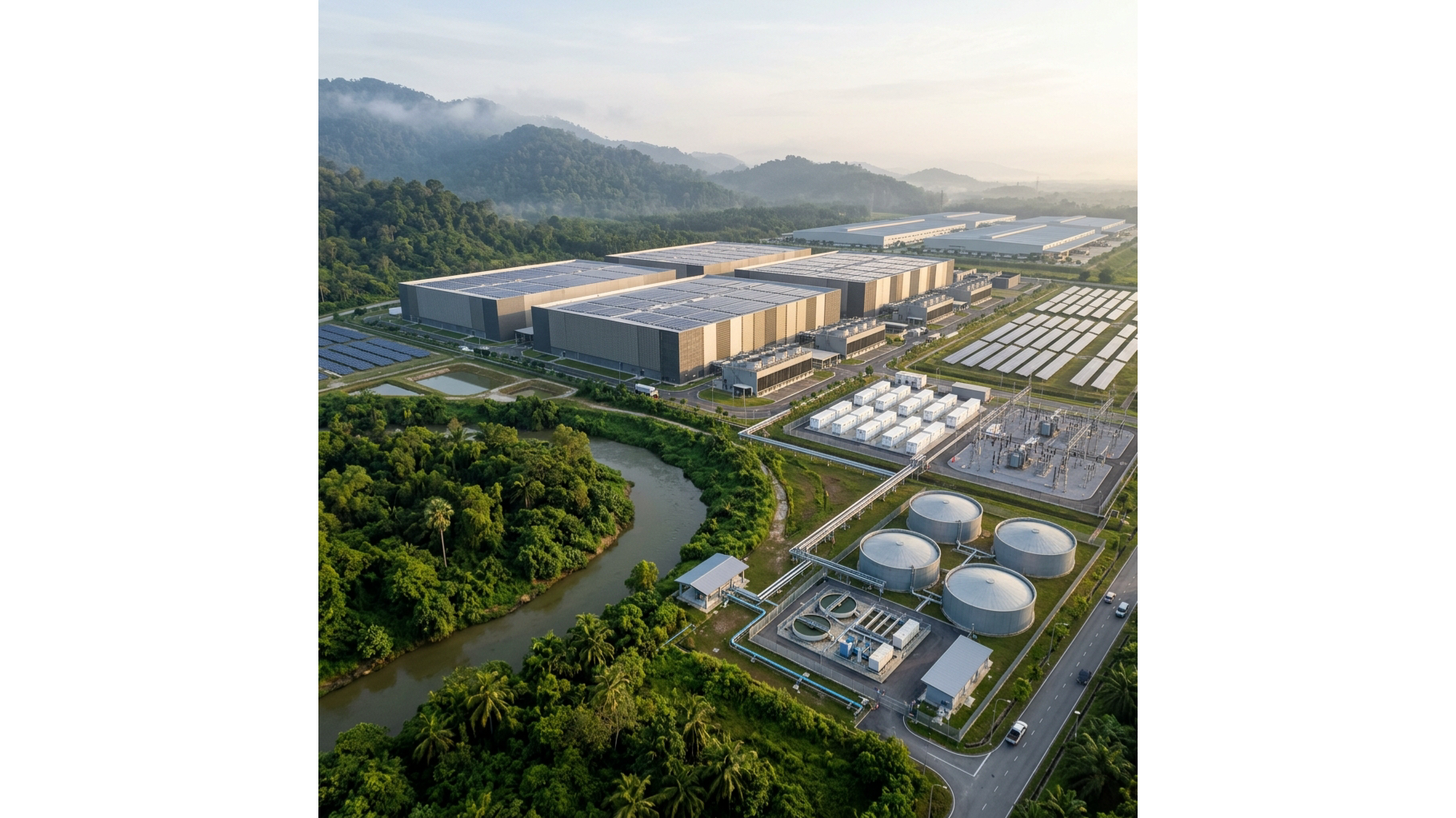
Malaysia is attracting growing interest from data centre developers as demand for cloud services, artificial intelligence and digital infrastructure increases across Southeast Asia. For investors, the opportunity extends beyond building facilities to accommodate servers. Location, industrial demand, infrastructure planning and long-term development potential all influence whether a project can succeed.
According to the experts at Sungai Samak Estate, investors considering data centre development in Malaysia should look beyond land availability and assess how a location fits into the surrounding industrial ecosystem. Proximity to manufacturing centres, educational institutions and transport networks can contribute to long-term development potential, provided essential infrastructure requirements can be met.
Why Malaysia Is Attracting Data Centre Investment
Malaysia offers access to Southeast Asian markets, an established manufacturing sector and government initiatives supporting digital investment. Its growing technology ecosystem has also created opportunities for infrastructure developers seeking locations outside traditional data centre hubs.
According to the Malaysian Investment Development Authority (MIDA), the country approved RM95.8 billion in data centre and cloud computing investments during the first half of 2026. This investment activity demonstrates substantial interest in expanding Malaysia’s computing infrastructure.
However, investment approvals do not guarantee project completion or profitability. Developers must still assess construction costs, utility availability, regulatory requirements and potential customers before committing capital.
Industrial Demand Creates Opportunities Beyond Cloud Computing
Data centres support more than cloud storage and conventional business applications. Modern manufacturing increasingly relies on computing resources for simulation, predictive maintenance, automated quality control and production analytics.
Automotive manufacturers, for example, may use advanced computing systems to model vehicle components, analyse production data and support engineering research. These applications create potential demand for reliable digital infrastructure near industrial operations.
Locations connected to established manufacturing ecosystems may therefore offer opportunities for developers exploring specialised computing services, although actual customer demand requires independent assessment.
Why Location Matters for Data Centre Development
A suitable site must offer more than sufficient acreage. Reliable electricity, fibre connectivity, water availability and planning permissions are essential considerations.
Power capacity is particularly important because data centres require continuous electricity for computing equipment and cooling systems. Developers must assess grid connection options, potential upgrade costs and realistic delivery timelines.
Connectivity also matters. Fibre routes, network redundancy and achievable latency influence which customers and applications a facility can serve.
Land near industrial centres can offer additional strategic advantages, but proximity alone does not establish technical suitability.
Why Emerging Industrial Locations Deserve Investor Attention
As established data centre hubs attract more development, investors may find opportunities in emerging industrial areas where land availability and proximity to manufacturing activity support future expansion.
These locations can offer space for purpose-built campuses, allowing developers to plan computing facilities, cooling systems and supporting infrastructure around specific operational requirements. Nearby industrial businesses may also create demand for AI processing, manufacturing analytics and engineering applications.
However, lower land costs or greater acreage do not automatically make a location suitable. Investors should compare electricity capacity, fibre connectivity, water availability, infrastructure upgrade costs and regulatory requirements before selecting a site.
The Potential for More Efficient Infrastructure
Data centre investment also involves long-term decisions about energy and water consumption.
Developers can investigate on-site solar generation, battery storage and cooling technologies suited to local conditions. Water reuse systems may also reduce dependence on freshwater supplies where technically and economically feasible.
Such infrastructure must be designed around operational requirements rather than assumed environmental benefits. Site-specific assessments are necessary to determine achievable efficiency, reliability and costs.
What Investors Should Evaluate Before Committing
Before purchasing land for a data centre, investors should examine the site’s physical characteristics, zoning, electricity capacity, network connectivity and access to essential utilities.
Commercial feasibility is equally important. Developers need to understand potential customer demand, capital expenditure, operating costs and the availability of qualified personnel.
For investors considering Malaysia’s expanding digital infrastructure sector, the opportunity lies in identifying locations where land, industrial demand and practical infrastructure planning can come together. Sungai Samak Estate’s land investment offering provides a starting point for evaluating potential projects.
Sungai Samak Estate
2 Jalan Sempurna off Jalan Gombak
Kuala Lumpur
Federal Territory
53000
Malaysia


