
Prior Lake, MN – October 14, 2026 – PRESSADVANTAGE –
Collision Center 1 Prior Lake is publishing consumer guidance that gives drivers a five-point framework for discussing a collision repair plan before work begins. The guidance focuses on the repair scope, repair-versus-replacement decisions, parts and refinishing, possible estimate changes, and vehicle-specific procedures.
Information about the facility is available through the Collision Center 1 Prior Lake location page.
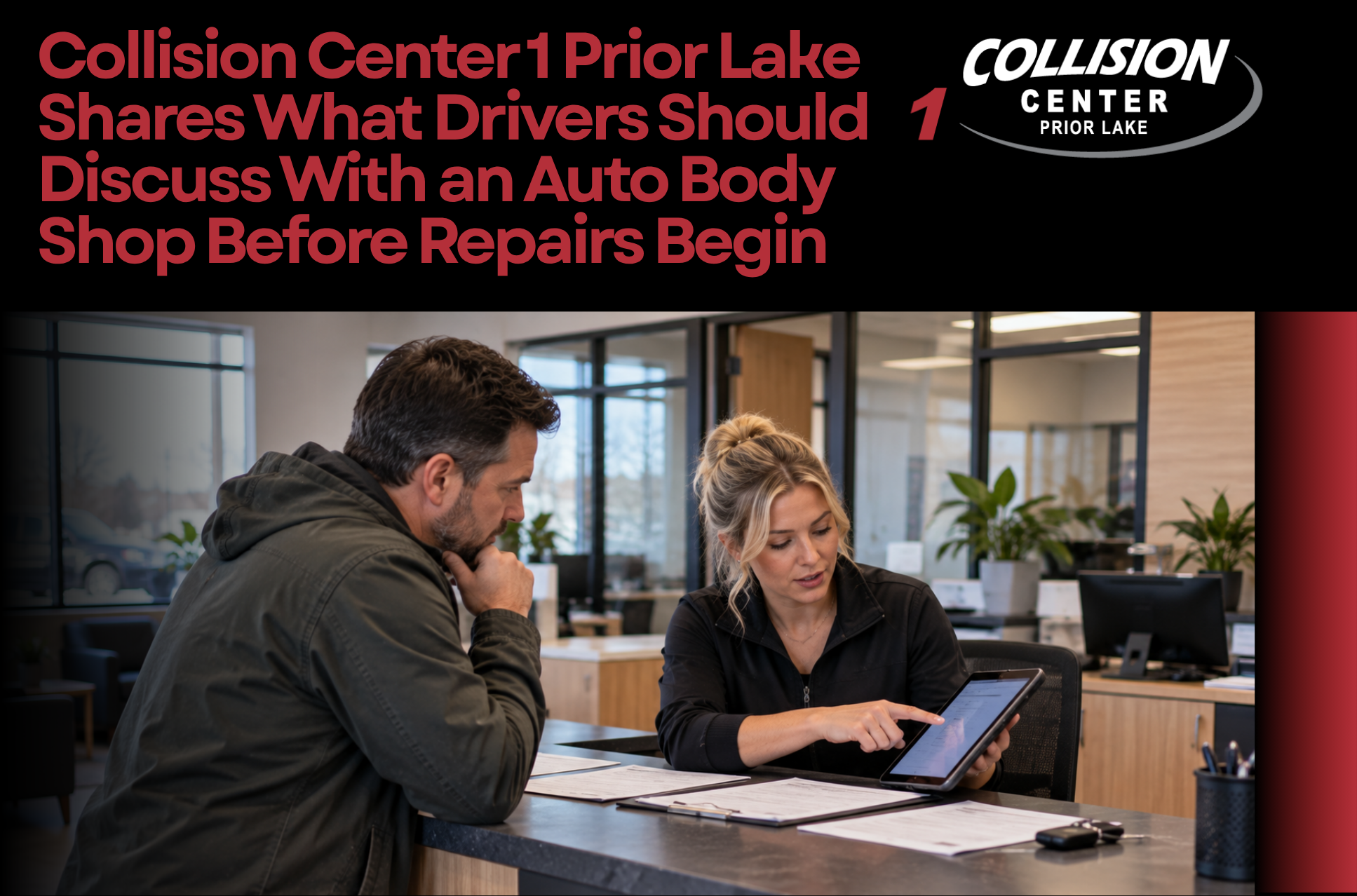
The first discussion point is the scope of the repair. After an accident, an estimate may include damaged panels, related components, labor operations, and refinishing items that are not immediately familiar to a vehicle owner.
Reviewing which areas were identified during the initial inspection can make those entries easier to understand. A bumper impact, for example, may involve the visible bumper cover along with retainers, brackets, lamps, trim, or other components depending on the vehicle and documented damage.
The second point is understanding which components are expected to be repaired and which are planned for replacement. A dented panel does not automatically require replacement. Material, damage severity and location, accessibility, attachment areas, and applicable repair procedures can influence that decision.
Through auto body repair services, damaged exterior components can be evaluated individually so the planned repair method reflects their documented condition.
Parts and refinishing make up the third discussion area. Drivers can review which replacement components are included in the estimate and which existing parts may need to be removed and reinstalled for repair access.
A component listed on an estimate does not necessarily mean it is being replaced. Trim, lamps, liners, handles, mirrors, and other parts may appear because technicians need to remove and reinstall them during body work or refinishing.
Drivers can also review which panels are scheduled for refinishing. Depending on the repair and vehicle finish, adjoining areas may be included in the refinishing process even when they were not directly damaged.
The fourth point involves possible changes after the initial estimate. Exterior components can restrict access to portions of a collision area. When applicable parts are removed, technicians may be able to evaluate areas that could not be fully inspected initially.
If additional collision-related damage is documented, supplemental information can update the repair plan. This does not automatically indicate that the original inspection missed visible damage. Some conditions cannot be confirmed until access improves.
When insurance is involved, drivers can also ask how repair-plan updates will be communicated during the claim. The repair facility documents the vehicle and planned operations, while coverage and payment decisions are determined according to the applicable insurance policy and claim.
The fifth discussion point is whether the vehicle requires procedures specific to its construction or equipment. Modern vehicles can use different combinations of steel, aluminum, plastics, composites, adhesives, welds, rivets, and other joining methods.
Cameras, radar equipment, parking sensors, wiring, and other electronics may also be positioned around common collision areas. Their presence does not mean every repair requires diagnostic or calibration work. Applicable manufacturer information can help identify procedures associated with the specific vehicle, affected components, and work being performed.
Drivers can also tell the repair facility about changes noticed after the accident. A door that became harder to close, an uneven trunk lid, a loose bumper edge, changed panel gaps, or a new vehicle message can provide additional context during the evaluation. These observations do not diagnose the problem, but they can identify areas that warrant examination.
The collision repair process can then proceed according to the documented repair plan, including applicable body work, parts replacement, refinishing, reassembly, and vehicle-specific procedures.
The October guidance is intended to simplify the conversation before repairs begin. Drivers can focus on five areas: what was damaged, what will be repaired or replaced, which parts and refinishing operations are planned, how additional documented damage will be handled, and whether vehicle-specific procedures apply.
Vehicle owners do not need to diagnose collision damage themselves. Understanding these five areas provides a practical way to review the repair plan and follow changes that may occur as additional information becomes available.
Collision Center 1 Prior Lake is located at 16111 Main Ave SE, Prior Lake, MN 55372. The facility provides auto body and collision repair services for Prior Lake-area drivers as part of Collision Center 1.
###
For more information about Collision Center 1 Prior Lake, contact the company here:
Collision Center 1 Prior Lake
Jerald Stiele
(952) 447-4259
layres@collisioncenter1.com
16111 Main Ave SE, Prior Lake, MN 55372


