
A new generation of scalp serums is focusing on scalp biology, barrier support, and long-term scalp environment health.
The Search for Non-Minoxidil Options Is Growing
In almost any conversation about hair, a familiar question surfaces: can you care for a sensitive scalp, an aging scalp, or early thinning without committing to a drug? More consumers are asking it, and the answer increasingly points to a category quietly gaining ground: the non-minoxidil scalp serum.
The appeal is practical. Some people have lived through the early shedding phase that can come with conventional treatments, or the redness, stinging, and irritation that sometimes follow. Others would rather not depend on a medication indefinitely. A growing group is simply thinking ahead, treating the scalp the way they already treat facial skin, as something worth supporting before problems set in.
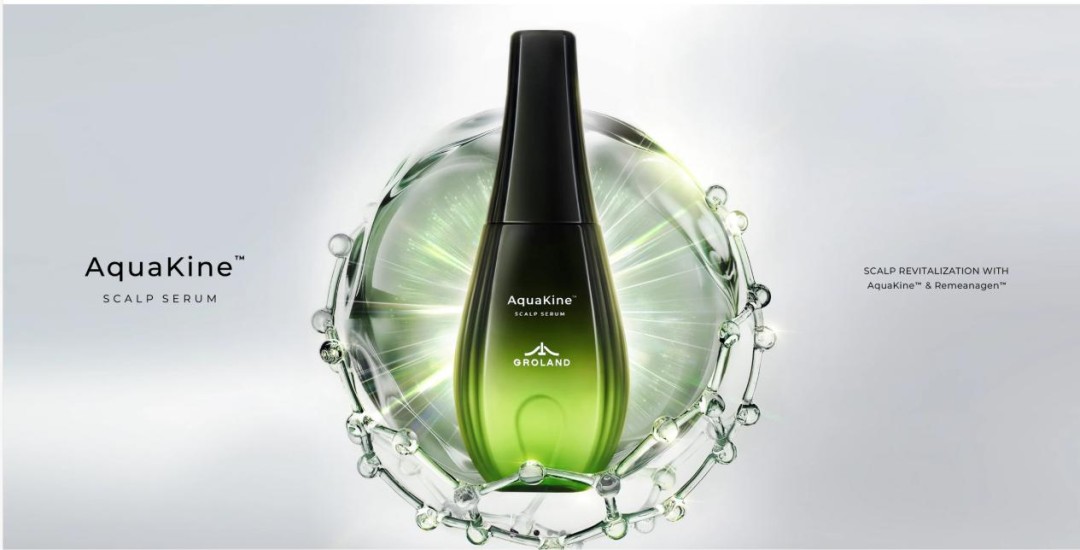
Among the brands working in this space is Groland, a Boston-based scalp-care company who builds Groland AquaKine Scalp Serum for sensitive, aging, and early-thinning concerns without minoxidil. The company is careful about what that means. A non-minoxidil scalp serum is not a stand-in for medical hair-loss treatment; it is a cosmetic product for people who want evidence-informed, long-term scalp care rather than a pharmaceutical routine.
What These Scalp Serums Are Designed to Do
A non-minoxidil scalp serum is not a drug like minoxidil, not a pill, and not a traditional styling serum aimed at the hair strand. It works on the scalp itself. Where minoxidil acts pharmacologically and may involve a shedding phase, and supplements work from the inside, an evidence-based scalp serum stays topical and focuses on the environment hair grows from: the barrier, oil balance, redness, and the microenvironment around the follicle. Support those, the thinking goes, and hair has a better chance of looking fuller over time. Groland AquaKine Scalp Serum positions squarely here, as a cosmetic serum for scalp health rather than a regrowth drug.
Why Scalp Biology Matters
Behind the category is a simple premise: hair concerns are often scalp concerns. As the scalp ages and absorbs daily stress, changes pile up. Oxidative stress builds, low-grade inflammation lingers around the follicle, the barrier weakens, collagen-related support declines, and the scalp microbiome shifts.
That helps explain why a sensitive scalp, an oily scalp, visible redness, and early thinning so often travel together. A compromised barrier reacts more easily, unbalanced oil makes the follicle’s surroundings less stable, and as collagen support fades with age, hair can look finer and less anchored. For anyone with fine, fragile hair or the first signs of thinning, the scalp is a logical place to start, and a reason the category is framed around long-term scalp health instead of a quick fix.
An AI-Designed Approach
Groland shows how the category is evolving. The brand grew out of a Boston laboratory focused on scalp aging, built on an academic research base and powered by the AI-driven biotechnology platform of XtalPi. Its premise is to bring pharmaceutical-grade development discipline to scalp care, not to turn the product into a drug, but to add molecular precision to how ingredients are found and tested. Using an “AI plus robotics” platform, the company screens, predicts, and validates molecular candidates far more faster than conventional formulation work allows, an efficiency it credits to data-driven discovery . Building on this, Groland developed the “Gemini” Molecular Formula, which consists of two core molecules. AquaKine Peptide, a cyclohexapeptide, is associated with scalp structural integrity and collagen-related pathways, and is positioned to support the barrier while easing the look of redness and sensitivity. Remeanagen is linked to follicle-related cellular energy and oxidative-stress regulation, meant to support a healthier follicle microenvironment rather than to wake up every follicle. Groland AquaKine Scalp Serum holds an FDA cosmetic listing, listed as a cosmetic and not approved as a drug, and is manufactured in accordance with GMP standards.
What the Testing Suggests
Evidence matters in this category, and so does restraint. Groland reports three kinds of testing: laboratory and preclinical work on the molecules, third-party cosmetic and clinical evaluation of the finished serum, and consumer experience. As a clinically tested scalp serum, Groland AquaKine Scalp Serum reports data pointing to improvements in scalp and hair appearance, with the caveat that individual results vary and cosmetic testing does not replace medical diagnosis.
A 14-day third-party study reported a roughly 58 percent reduction in scalp sebum and about a 44 percent improvement in redness and barrier indicators,(both as maximum individual results). A separate six-week study of 32 participants reported gains in hair density of about 21 percent over baseline, a higher share of growth-phase hair, and a sharp rise in scalp hydration, alongside lower water loss through the skin. On safety, the six-week evaluation found a panel of 63 hormones undetected and no irritation in repeated testing. The formula is hormone-free and built to be gentle, though responses still differ from person to person.
Who It’s For, and Who It Isn’t
Because the focus is the scalp environment, the category tends to suit certain people: those with a sensitive scalp who found conventional treatments irritating, anyone wary of a shedding phase or long-term dependency, users noticing early thinning or fine, fragile hair, people with oily scalps chasing better balance, and skincare-minded users treating scalp aging the way they treat their face.
The limits matter just as much. These are cosmetic products, not treatments for medical conditions. Significant or sudden hair loss, diagnosed androgenetic alopecia, alopecia areata, or any scalp disease calls for a physician or dermatologist. Pregnant or nursing users should check with a doctor first.
Looking Ahead
The bigger shift is in how people think about hair. Scalp care is moving from surface conditioning toward something closer to evidence-based scalp wellness, grounded in biology, barrier support, and long-term scalp health. The rise of the non-minoxidil scalp serum is one clear marker of that change, pushed along by consumers who want gentler, clinically tested, more transparent options.
As AI-designed cosmetic research matures, the brands that earn trust will be the ones honest about the boundaries: what the science supports, who a product is for, and where medical care still belongs.
Media Contact
Company Name: Groland inc.
Contact Person: Mia
Email: Send Email
Country: United States
Website: https://groland.us/


