
Key Takeways
- What cattle eat directly shapes the flavor, texture, and nutrition of beef — grass-fed and grain-fed beef are genuinely different products, not just marketing labels.
- Grass-fed beef tends to be leaner, earthier, and more complex in flavor, while grain-fed beef is milder, more buttery, and more consistent due to higher marbling.
- The nutritional gap is real: grass-fed beef carries more omega-3 fatty acids and CLA, and a more favorable omega-6 to omega-3 ratio, while grain-fed beef has a higher omega-6 to omega-3 ratio and is higher in total fat — and those differences actually influence taste.
- Cooking technique matters more with grass-fed beef — its leaner composition makes it easy to overcook, but a few simple adjustments produce outstanding results.
- For home cooks, the leaner composition of grass-fed beef rewards a few simple technique adjustments — and the payoff in flavor is worth it.
The debate over grass-fed vs. grain-fed beef goes far beyond nutrition labels and price tags. For anyone who takes their cooking seriously, the real question is: does it actually taste different? The short answer is yes — significantly so. Diet, fat composition, and farming practices all leave a detectable imprint on the final cut of meat. What follows breaks down exactly how and why.
What Cattle Eat Directly Changes How Beef Tastes
Grass-fed cattle take longer to reach market weight because grass provides lower caloric density than grain. That slower growth builds leaner muscle with less intramuscular fat, a more robust chew, and a stronger, more complex flavor. Grain-fed cattle, by contrast, gain weight faster, develop more marbling, and produce a softer, richer, more uniform bite. Neither outcome is accidental — both are the result of deliberate choices made at the farm level.
Two Very Different Flavor Profiles
Grass-fed and grain-fed beef don’t just taste slightly different — they taste fundamentally different. The distinction is noticeable even to casual eaters, and it stems directly from what each animal consumed throughout its life.
Grass-Fed: Earthy, Robust, and Gamey
Grass-fed beef is often described as earthy, mineral-forward, and slightly gamey — in the best possible way. The varied diet of pasture grasses, legumes, and wild forage introduces a wide range of aromatic compounds into the meat, creating flavor notes that are deeper and more layered than grain-fed alternatives.
Some compare it to the concept of terroir in wine — the idea that the land itself flavors the final product. Cattle grazing different pastures at different times of year will produce beef with subtly different flavor profiles. That variability is part of the appeal. It’s a taste that reflects a real environment, not a controlled feedlot formula.
The fat in grass-fed beef also carries a distinct character. Because of higher beta-carotene content from pasture plants, the fat often has a faint golden hue and delivers a cleaner, slightly more delicate finish than the heavier fat of grain-fed beef. Umami — the savory depth that makes great beef memorable — tends to be more pronounced in grass-fed cuts, contributing to a deeper, more complex flavor.
Grain-Fed: Mild, Buttery, and Consistent
Grain-fed beef, particularly corn-finished beef, is what most Americans grew up eating. Its flavor profile is mild, slightly sweet, and unmistakably buttery — a direct result of the high-calorie, high-energy feed that accelerates fat development within the muscle tissue.
That intramuscular fat (marbling) melts during cooking and coats the palate with a rich, smooth sensation. The Maillard reaction — the browning process that creates crust and depth during searing — interacts with that fat to produce the familiar, crowd-pleasing flavor most people associate with a great steakhouse cut. It’s consistent, predictable, and forgiving to cook.
The tradeoff is complexity. Because grain-fed cattle eat a controlled, uniform diet, the flavor profile of the beef is narrower. It’s reliably good, but it doesn’t carry the layered, environment-influenced character that grass-fed beef offers.
Texture Is Just as Different as Taste
Flavor is only half the story. The physical experience of eating grass-fed vs. grain-fed beef — how it feels in the mouth, how it responds to a knife, how it holds up under heat — is equally distinct.
Why Grass-Fed Beef Is Firmer and Leaner
Because grass provides less energy per bite than grain, grass-fed cattle work harder and develop denser muscle fiber. The result is a firmer, leaner cut of meat with less fat threaded through the muscle. That structure gives grass-fed beef a more substantial, satisfying chew — what some describe as a more “meaty” bite that lets the actual beef flavor come forward.
The lower fat content also means grass-fed beef is more sensitive to heat. Without the insulation of marbling, it can go from perfectly cooked to dry and tough quickly. That’s not a flaw in the beef — it’s a characteristic that rewards the cook who pays attention.
How Marbling Makes Grain-Fed Beef More Tender
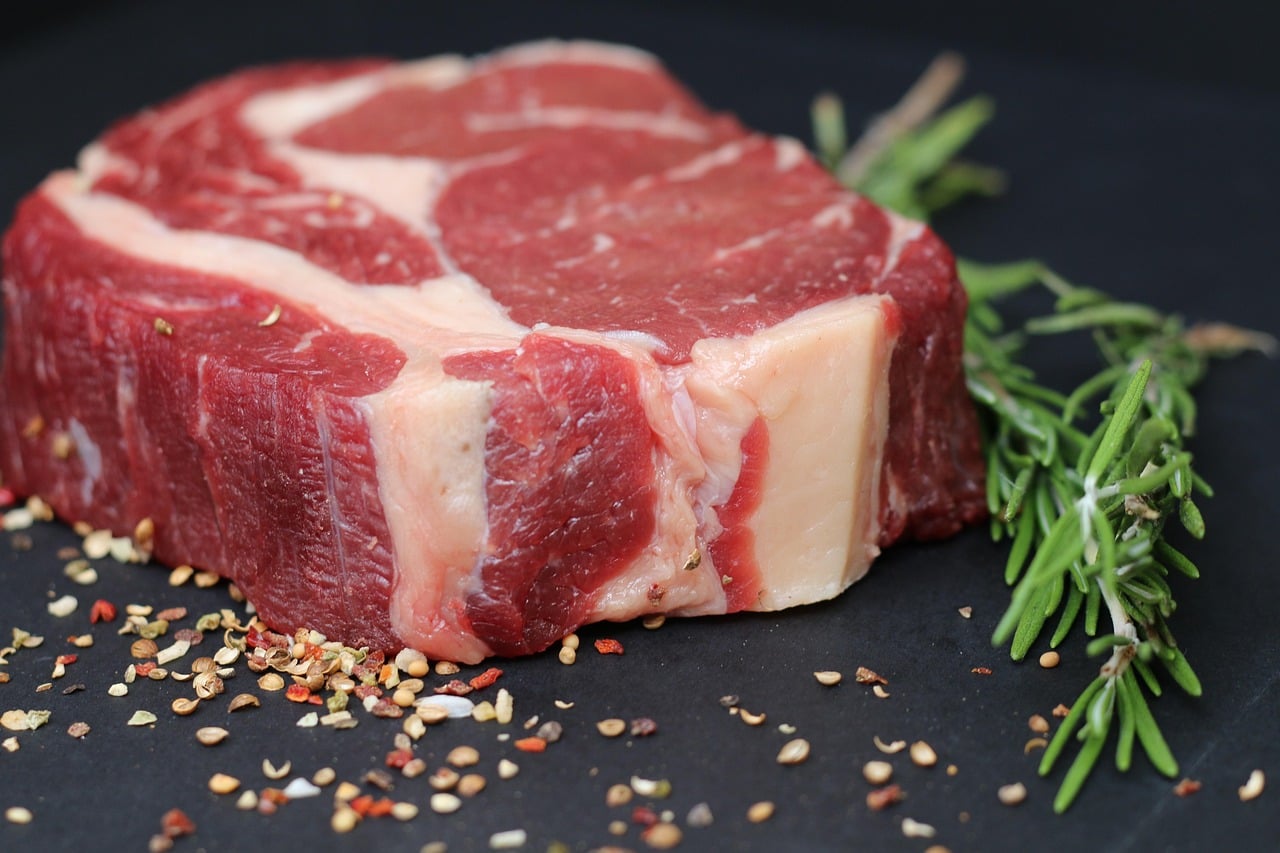
Marbling is the primary reason grain-fed beef is so tender. The intramuscular fat melts as the meat cooks, essentially basting the muscle fibers from within. This keeps the meat moist, soft, and forgiving even if it’s pulled a few degrees past the ideal temperature.
For home cooks who aren’t yet comfortable monitoring internal temps precisely, grain-fed beef offers a wider window of error. It’s also why grain-fed cuts perform exceptionally well across a range of cooking methods — from high-heat grilling to low-and-slow braising — without demanding much technique adjustment. The fat does a lot of the work.
Nutrition Shapes Flavor, Too
Omega-3s, CLA, and Beta-Carotene in Grass-Fed Beef
Grass-fed beef contains significantly higher levels of omega-3 fatty acids compared to grain-fed beef. These polyunsaturated fats contribute to a cleaner, lighter fat flavor — less heavy on the palate, with a fresher finish. Grass-fed beef is also notably higher in conjugated linoleic acid (CLA), a beneficial fatty acid linked to a range of health advantages, and in beta-carotene, the antioxidant that gives pasture-raised fat its characteristic golden color.
Beyond the health implications, these compounds influence sensory experience. Higher antioxidant content slows fat oxidation, which means grass-fed beef is less likely to develop off-flavors from fat going rancid — a subtle but meaningful quality difference, especially in aged or stored cuts. Overall, grass-fed beef also tends to be lower in total calories and fat than its grain-fed counterpart.
Higher Omega-6 to Omega-3 Ratio and Fat Content in Grain-Fed Beef
Grain-fed beef carries a higher ratio of omega-6 fatty acids relative to omega-3s — a shift driven by the corn and soy-heavy diet. Omega-6-rich fats tend to feel heavier and produce a richer, more indulgent mouthfeel. That’s part of what makes grain-fed beef taste “buttery” — the fat composition itself is denser and more saturated.
The higher overall fat content in grain-fed beef also means more energy released during cooking, which supports that deep, caramelized sear and the satisfying richness most people associate with a well-marbled steak. It’s a flavor profile built on an abundance of fat, rather than the complexity of the animal’s varied diet.
How to Cook Grass-Fed Beef Without Drying It Out
The biggest mistake home cooks make with grass-fed beef is treating it like grain-fed beef. The leaner composition demands a different approach — but once that’s understood, grass-fed beef consistently delivers outstanding results.
1. Use Lower Heat and Shorter Times for Steaks and Lean Cuts
Grass-fed beef cooks faster than grain-fed — less fat means less heat buffer. Stick to medium or medium-high heat to build a proper sear without cooking through too fast. Cast iron works particularly well here, holding heat evenly without needing extreme temperatures.
2. Pull It at Medium-Rare (130-140°F)
Grass-fed beef is at its best between 130°F and 140°F internal temperature. Beyond that, the leaner muscle fibers tighten significantly, and the eating experience suffers. A reliable instant-read thermometer removes the guesswork entirely. Pull the steak a few degrees before the target — carryover cooking will take it the rest of the way during resting.
3. Marinate Tougher Cuts with Acid
For tougher cuts — flank steak, skirt steak, chuck roast — an acidic marinade makes a meaningful difference. Vinegar, citrus juice, or even yogurt works to gently break down the denser muscle fibers in grass-fed beef, improving tenderness without masking the natural flavor. A few hours is usually sufficient; overnight marinades can sometimes over-tenderize and affect texture negatively.
4. Rest the Meat Before Cutting
Resting is important for any beef, but it’s especially critical for grass-fed. After pulling the meat from the heat, allow it to rest for at least five minutes — longer for thicker cuts. This lets the juices redistribute throughout the muscle rather than pooling and running out the moment the knife breaks the surface. Cutting too soon into a grass-fed steak is one of the fastest ways to end up with a dry, disappointing result from what was otherwise a great piece of meat.
For True Flavor, Grass-Fed Beef Is Worth It
Grass-fed and grain-fed beef are genuinely different eating experiences — and neither one is an accident. Grain-fed beef earns its place: it’s consistent, tender, and broadly accessible, with a mild richness that has defined American beef culture for decades. But for home cooks who want more from their meat — more complexity, more nutritional value, more of a connection to how and where food is raised — grass-fed beef delivers in ways that grain-fed simply can’t replicate.
The earthy depth, the cleaner fat, the leaner texture that rewards a skilled hand in the kitchen — these aren’t characteristics to be managed around. They’re features. Grass-fed beef asks a little more from the cook, and in return, it gives a lot more on the plate.
Freedom Valley Farm
+1 443 752 4338
2523 Bradenbaugh Road
White Hall
Maryland
21161
United States


