
Key Takeaways
- Auricular and cervical vagus nerve stimulation target different anatomical sites, so devices and protocols built for one are not automatically transferable to the other.
- Clinical protocols for non-invasive approaches often start with a supervised first session before a patient ever uses a device at home.
- Clear screening, staff training, and supervised onboarding matter as much as the device itself when a clinic adds vagus nerve stimulation to its services.
- Practitioner support programs can supply protocol guidance and staff education for clinics adopting this approach.
Vagus nerve stimulation has moved from a niche neurology intervention into something patients ask about by name, which puts clinic owners and practitioners in a new position: deciding whether to add it, and if so, how to do it responsibly. The honest answer is that the question cannot be settled with a single yes or no. It depends on which device, which protocol, and which population a practice intends to serve.
Not All VNS Devices Are the Same
The phrase “vagus nerve stimulation” covers a wide range of tools, from clinical devices requiring professional administration to small wearables clipped onto the ear. These devices differ in where they stimulate, how much training they require, and how much ongoing oversight a patient needs. Treating them as one category overlooks real differences in anatomy, regulatory status, and intended use, the way grouping unrelated medical tools together would.
One point practitioners weighing this decision should sit with: auricular and cervical transcutaneous vagus nerve stimulation target different anatomical sites entirely, so devices and protocols built for one are not interchangeable with the other. That distinction should shape early decision-making long before a clinic starts thinking about pricing or scheduling. Nuropod offers information on nervous system regulation and performance support that can serve as a reference point while comparing options.
Making a sound choice starts with a device’s mechanism and evidence base, not its marketing. Practitioners who take time to understand the anatomical target, the waveform, and the intended use case will be far better positioned to set realistic expectations with patients later.
Defining Your Service’s Scope
Before adding any form of vagus nerve stimulation to a service menu, a clinic benefits from writing down, in plain language, what the service is meant to do and for whom. This single step prevents a lot of downstream confusion, both for staff communicating with patients and for patients forming expectations.
Nervous System Support vs. Medical Treatment
A wearable, non-invasive neuromodulation device marketed for nervous system regulation and performance optimization occupies a different regulatory and clinical space than a device positioned as a medical treatment. Being precise about this distinction protects both the practice and the patient. A service built around general nervous system support should be described that way consistently, in consultation materials, intake forms, and conversations with patients, rather than drifting into language that implies diagnosis or treatment of a specific medical condition.
Screening and Candidate Considerations
Screening deserves real attention, even for non-invasive approaches. Device-level safety features are part of the safety conversation too, not just patient behavior, which is another reason to look closely at how a device was designed and tested.
Practices considering this service should think through a short list of screening questions as part of intake, such as:
- Any history of ear trauma or persistent ear pain
- Existing cardiovascular conditions
- Metal implants in the head or neck region
- Current use of other neuromodulation or implanted medical devices
- Pregnancy status, since manufacturers and clinical guidance commonly exclude this population from use
This list is a starting point rather than a substitute for a clinic’s own clinical judgment and a device manufacturer’s specific guidance.
Building Staff Training and Protocols
Supervised First Sessions Matter
Research protocols offer a useful model. Participants often complete their first session under supervision, receiving face-to-face instruction on site identification, electrode placement, device operation, intensity adjustment, and safety precautions, and demonstrate correct use before taking the device home. Participants demonstrated correct use under supervision before taking the device home for remaining sessions. This structure, a supervised introduction followed by independent use, provides a reasonable template for clinics building their own onboarding process, even outside a formal research context.
Instructing Patients on Safe Home Use
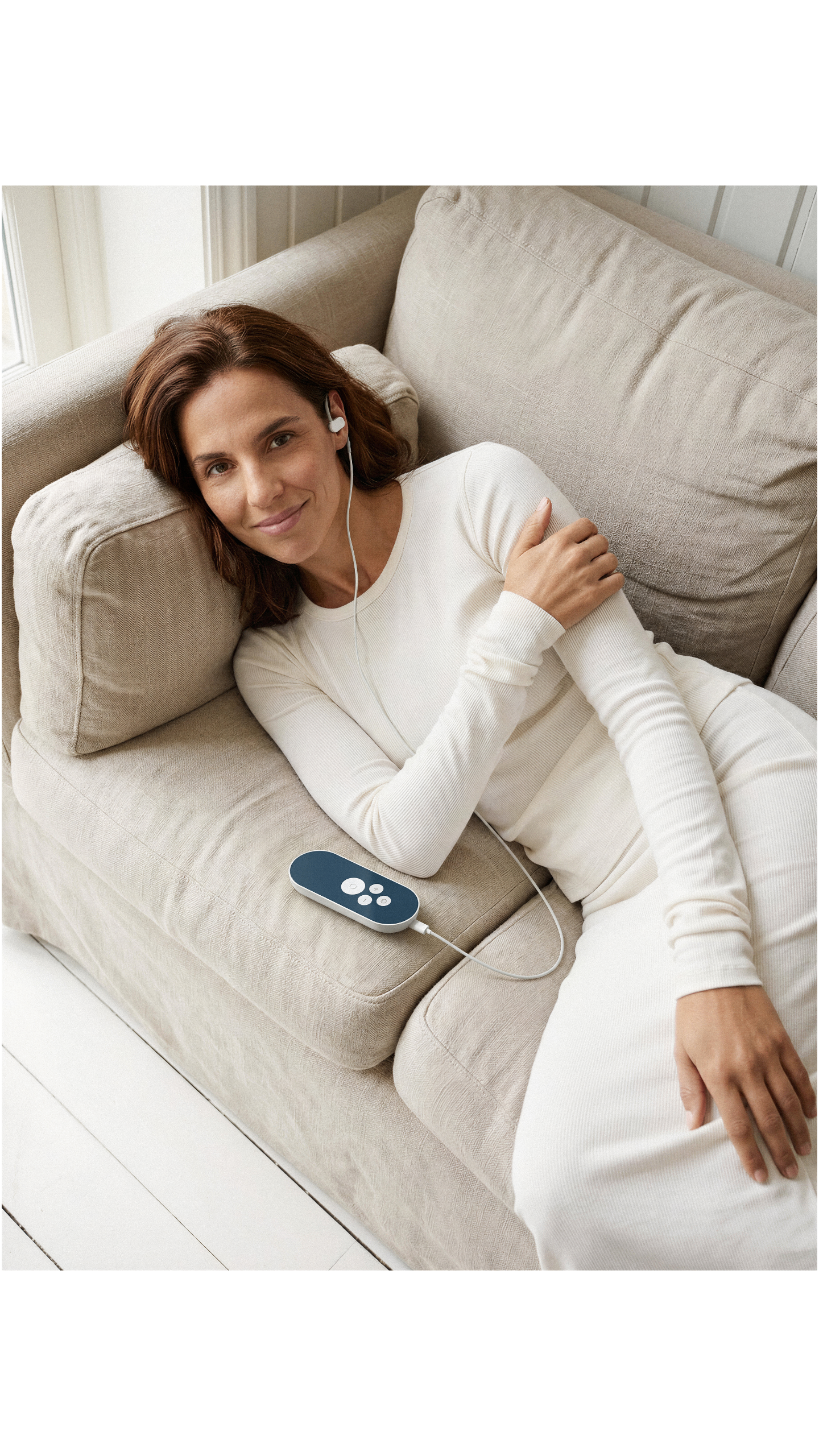
Clear instructions matter just as much as the first supervised session. One non-invasive wearable clips onto the tragus and is typically worn for around 30 minutes, once or twice a day, during ordinary activities like working, reading, or watching television. Translating that kind of simplicity into clear, written, patient-facing instructions, covering placement, duration, and what to do if something feels wrong, is a core part of any clinic’s training protocol rather than an afterthought.
Staff training should cover more than device operation. It should also prepare team members to answer common patient questions, recognize when a patient should be referred back for reassessment, and document sessions consistently so that follow-up conversations have something concrete to reference.
What Practitioner Support Programs Can Offer
Clinics do not have to build every piece of this from scratch. Nuropod by Parasym’s professional program gives practitioners access to information about studies, science, and recommended protocols, along with continuing-education opportunities to become an AVNT™ practitioner, direct access to a scientific research team, and staff education and implementation guidance. Programs structured this way can shorten the runway between deciding to offer a service and actually delivering it with confidence, particularly for practices without an in-house research team.
Whatever program or vendor a clinic works with, the same questions apply: What training is actually provided, and how is it delivered? Who can practitioners contact with clinical questions after onboarding? What does ongoing support look like once the device is already on the treatment room shelf? Answers to these questions matter more than a glossy brochure.
Weigh Specifics, Not Assumptions, Before Offering VNS
Adding vagus nerve stimulation to a service menu is a reasonable move for many practices, but it works best when grounded in specifics rather than assumptions. The anatomical target, the device’s intended use, the scope of the service being offered, and the training and follow-up systems built around it all shape whether patients have a safe, well-supported experience.
Practitioners who take the time to ask precise questions about mechanism, about evidence, about what happens after a patient leaves the first session, put themselves in a far stronger position than those who assume one VNS device performs the same way as the next. For a closer look at how one non-invasive approach structures its protocols and practitioner resources, vagus nerve stimulation training and onboarding support is worth reviewing as part of that research process.
Disclaimer: Research referenced in this article was conducted using Parasym’s neuromodulation technology under research conditions. Findings relate to specific study populations and should not be interpreted as guaranteed individual outcomes. Nuropod is classified by the FDA as a non-significant risk device and is not intended to diagnose, treat, cure, or prevent any disease.
Nuropod by Parasym
press@nuropod.com
2108 N Street
Sacramento
California
95816
United States


